

-
![Crawler Type Mobile Stacker Reclaimer]()
Crawler Type Mobile Stacker Reclaimer
Add to Inquiry -
![Crawler Type Telescope Mobile Stacker Reclaimer]()
Crawler Type Telescope Mobile Stacker Reclaimer
Add to Inquiry -
![Wheeled Bulk Reception Feeder]() Add to Inquiry
Add to Inquiry -
![Tracked Bulk Reception Feeder]() Add to Inquiry
Add to Inquiry -
![Link Conveyors]() Add to Inquiry
Add to Inquiry -
![Mobile Radial Stacker]() Add to Inquiry
Add to Inquiry -
![Telescopic Mobile Belt Conveyor]()
Telescopic Mobile Belt Conveyor
Add to Inquiry -
![Portal Type Scraper Reclaimer]() Add to Inquiry
Add to Inquiry -
![Half Portal Type Scraper Reclaimer]()
Half Portal Type Scraper Reclaimer
Add to Inquiry -
![Mobile Stacker Truck Unloader]() Add to Inquiry
Add to Inquiry -
![Truck Unloading Ramp Stacker]() Add to Inquiry
Add to Inquiry -
![Mobile Hopper Feeders]() Add to Inquiry
Add to Inquiry


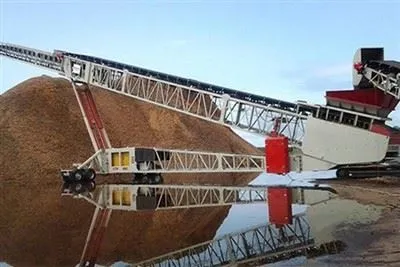
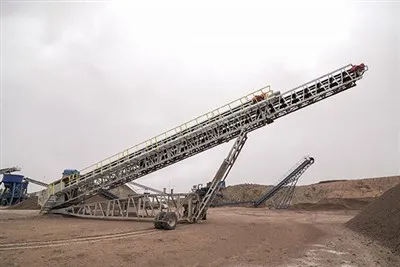


SONGDA HEAVY: Your Professional Stacker Reclaimer
Supplier
Wuxi Songda Heavy Machinery Co., Ltd. was established in 2010. The company is committed to be one of the best quality manufacturing company in China for heavy machineries, non-standard machineries and its steel structures, components, assembly and commissioning, providing varous parts for bulk material handling equipment, mining equipment, off-shore equipments, port and terminal machieries, conveyor system, self-unloading ships, marine engineering project. Songda has maintained its long-term business cooperation with a number of world-famous companies.
Why Choose Us?
Variety of Products
We mainly research and produce heavy machineries, non-standard machineries and its steel structures, components, assembly and commissioning. Additionally, we also provide varous parts for bulk material handling equipment, mining equipment, off-shore equipments, port and terminal machieries, conveyor system, self-unloading ships, marine engineering project. As a result, you can easily find the equipment you need.
Wide Market
SONGDA HEAVY has specialized in heavy machineries over 14 years, with our products sold in over 80 countries and regions worldwide. Now, we have successfully maintained long-term business cooperation with a number of world-famous companies and received unanimous praise.
Superior Service and Logistics
Our customer service team is available to provide support and solutions to customers at all times. All after-sale request will be responded in 24 hours. We provide finite element analysis services, process design and validation of Mobile Bulk Reception Feeder. Besides, complete and professional process equipment guarantees the reliability of products and on-time delivery. Our past order lead time is better than the industry average.
Advanced Equipment
Our company has automatic production lines and advanced production equipment, from laser cutting, CNC bending, large boring milling equipment, big painting hall, heavy lift assembly site to meet your requirement.
High Quality
Songda factories covered 15000 square meters and totally 150 employees to promise the products best quality control. Our professional QC team and the standards/certifications we followed, such as ISO9001, ISO14001, ISO18001, ISO3834 , EN1090, EN287, AWS2.1. AS can strictly control the product quality. We mainly choose raw material from big steel factory, such as NANJING STEEL, SHA STEEL, which are best and largest raw material manufacturer in China.
Rich Experience
We have more than 14 years of experience in material handling equipment R&D, stacker reclaimer, ship loader, ship unloader, heavy duty steel structure manufacturing and so on. Moreover, we are an innovation driven company and have 15 patents, and 3-5 patents are authorized every year.
A stacker reclaimer can handle material ranging from coal to iron ore pellets found in steel mills, coal yards, and transfer stations, primarily functioning for stacking and reclaiming materials. Stacker reclaimer machines typically have a boom that is capable of reaching over the top of the stack of materials used for reclamation and a bucket or claw that can grab the material and stack it. This increases the flexibility of the storage location in terms of materials processing, in particular in port areas, enhances the attractiveness of the entire cargo handling complex.
Types of Stacker Reclaimers
Bridge Type Stacker Reclaimer
Bridge-type stacker reclaimers have a bridge that spans the width of the stack. They are used for stacking and reclaiming material in a single row or stack.
Bucket-wheel Stacker Reclaimer
Bucket-wheel stacker reclaimers, on the other hand, have a bucket wheel that spins around a central axis, intended for stacking and reclaiming material in multiple rows or stacks.
Benefits of Stacker Reclaimer
Efficient Storage and Recycling
The stacker reclaimer can effectively store and recycle coal and other materials. By precisely controlling the coal storage and retrieval process, the efficient use of materials can be ensured and waste reduced.
Precise Operation
The stacker reclaimer can precisely control the stacking position and quantity of coal, reducing the possibility of waste and spillage. This is very important to ensure the stable operation of coal yards or power plants.
Save Manpower
The use of stackers and reclaimers can greatly reduce manual operations, reduce labor costs, and reduce the risk of workers working in harsh environments.
Saving Space
Through reasonable storage design, the stacker and reclaimer can store more materials in a limited space, thereby improving storage efficiency and saving land resources.
Environmental Protection
By precisely controlling the stacking and transportation of coal, the stacker and reclaimer helps reduce the scattering and flying of coal, thereby reducing environmental pollution.
Less Required Maintenance
Stacker reclaimers are often designed with ease of maintenance and care in mind, which helps extend the life of the equipment and reduces production interruptions due to equipment failure.
Flexibility
The stacker reclaimer can adapt to coal yards of different layouts and sizes. Whether it is a strip coal yard or a circular coal yard, the equipment parameters and layout can be adjusted to meet the needs.
Safety
The design of stackers and reclaimers usually takes into account safety factors, such as preventing equipment overload and preventing materials from slipping, etc., thereby reducing safety risks during the work process.
Components of Stacker Reclaimer
Bucket Wheel and Drive
Stacker reclaimer bucket wheel are used for reclaiming. The bucket wheel drive either consists of hydraulic system or motor, fluid coupling, brake and gear box, mounted on a drive frame supported by bracket. The hollow output shaft of the gear box is clamped on the drive pulley shaft through a key less shrink disc element.
Tripper Conveyor
The tripper raises the belt of the yard conveyor and supports it over a concave curve and discharge through guide chute on to the intermediate conveyor. After passing over the discharge pulley. The belt is guided back to the yard level over bend pulleys.
Boom Conveyor
The reversible boom conveyor drive is mounted on a drive frame and is supported on the revolving frame by a torque arm with plain spherical rod ends. The bearing housing supporting the discharge pulley assembly on either side are supported on sliding blocks at boom head.
Intermediate Conveyor
The intermediate conveyor shall travel on the same rail as those of machine. After receiving material from tripper conveyor through vibro feeder it transfer the material to central chute during stacking operations.
Boom Luffing Arrangement
The raising and lowering of the hinged bascule system and controlling it in operation, is achieved by a hydraulic system with two hydraulic cylinders. The cabin is also maintained level automatically by a hydraulic cylinder fed simultaneously from the system. The power pack also includes an independent system for actuation of the chutes etc. and is mounted on at the rear of the revolving platform.
Slewing Arrangement
The revolving superstructure of the stacker reclaimer is supported on a large diameter slewing bearing. An external ring gear, bolted to the revolving frame, is driven by two meshing pinions powered by two independent drive units each comprising sq. cage motor, slip clutch, brake, and planetary with bevel helical gear reducer.
Long Travel Mechanism
The function of long travel mechanism is to move the stacker from one position to another position in rail track.
Cable Reeling Drum
The cable reeling drum is specialized application for power transmission because of severe limitation of tensions in cable. The cable reeling drum is used to transfer electric power through cable from junction box located at center or end of runway to moving machines. The cable reeling drum serves winding and unwinding of cable automatically. The winding and unwinding operation of cable is guided through roller guide way.
Application of Stacker Reclaimer

Ports
In ports, stacker reclaimers are used to manage and move bulk cargoes such as coal, ore, sand and gravel, etc. They enable efficient stowage and retrieval to accommodate vessel loading and unloading needs.

Mine
In mines, stacker reclaimers are used to manage the extraction and transportation of ore. They can operate efficiently in complex mining environments and improve ore mining efficiency.

Metallurgy and Cement Industry
In the metallurgical and cement production process, the stacker reclaimer is used to stack and retrieve raw materials or semi-finished products. This helps ensure the continuity and efficiency of the production process.

Thermal Power Plants
In thermal power plants, stacker reclaimers are used to manage the storage and supply of fuel coal. They can accurately and quickly retrieve materials according to power generation needs to support the operation of the generator.
Key Factors to Consider When Choosing Stacker Reclaimer

Material Type and Characteristics
● Consider the type of material you will be handling, such as coal, ore, sand, gravel, or other bulk materials.
● Understand the material's characteristics, including its density, abrasiveness, moisture content, and any other relevant properties that may affect equipment selection.
Capacity and Throughput
● Determine the required capacity and throughput rate of the stacker reclaimer based on your production needs.
● Consider both the maximum and minimum capacity requirements to ensure the equipment can handle peak loads as well as low-volume periods.
Space and Layout Considerations
● Evaluate the available space in your storage yard or plant to determine the appropriate size and configuration of the stacker reclaimer.
● Consider the layout of your operation, including access roads, conveyor systems, and other equipment, to ensure the stacker reclaimer can operate efficiently.
Automation and Control Requirements
● Determine the level of automation and control you require for your stacker reclaimer.
● Consider factors like remote monitoring, automatic material handling, and integrated control systems to improve productivity and efficiency.
Maintenance and Reliability
● Evaluate the maintenance requirements and serviceability of the stacker reclaimer.
● Consider factors like ease of access for maintenance personnel, durability of components, and availability of spare parts.


Environmental Compliance and Safety Standards
● Ensure the stacker reclaimer meets all relevant environmental compliance and safety standards.
● Consider factors like dust suppression systems, noise reduction features, and safety guards to protect operators and the environment.
Cost and Budget Considerations
● Analyze the cost of the stacker reclaimer, including the initial purchase price, installation costs, and ongoing maintenance expenses.
● Ensure the equipment fits within your budget and provides a cost-effective solution for your operation.
Using a Stacker Reclaimer
Operator Training
Ensure that operators have received proper training on the safe and effective use of the stacker reclaimer. Operators should be familiar with the equipment's controls, safety features, and maintenance requirements.
Pre-Operational Checks
Before operating the stacker reclaimer, perform a pre-operational check to ensure the equipment is in good condition and ready for use. Check the lubrication, belts, and other critical components to ensure they are properly maintained and free of any defects.
Start-Up Procedure
Follow the manufacturer's instructions for starting up the stacker reclaimer. This may involve engaging the power supply, activating the control system, and initializing the equipment's operating parameters.
Material Handling
Use the stacker reclaimer to handle and stockpile materials such as coal, ore, or other bulk materials. Position the equipment over the material pile and adjust the boom and belt speed to control the flow of material. Operate the equipment carefully to avoid spilling or scattering material.
Monitoring and Adjustment
Continuously monitor the operation of the stacker reclaimer, paying attention to the belt speed, material flow, and any potential issues or malfunctions. Adjust the equipment's settings as necessary to optimize performance and ensure safe operation.
Shutting Down
When finished using the stacker reclaimer, follow the manufacturer's instructions for shutting down the equipment. This may involve disengaging the power supply, deactivating the control system, and performing any necessary post-operational checks or maintenance.
Checking luffing hydraulic cylinders and tripper hydraulic cylinders for any leakage.
Checking for cleanliness of all components of stacker reclaimer including the hydraulic power pack.
Checking all oil filters (Suction line, pressure line and return line) and if required replace.
Checking the luffing and slew hydraulic oil level in power pack tank.
Checking auto lubrication system and its working condition for slew bearings and long travel wheel bearings.
Checking all hydraulic hoses for any leakages.
Checking all power pack and its hydraulic components for any leakages.
Checking hydraulic oil tank for sealing and leakages.
Checking oil cooler.
Checking all hydraulic valves cleanness.
Checking the hydraulic oil condition by visualize.
Checking Slew and bucket drive hydraulic motor and its cleanness.
Checking rail clamp and mounting fasteners.
Checking all boxes of stacker reclaimer for oil level, cleanness of breather.
Checking all couplings for its smooth working.
Checking conveyor belt joints condition and its top and bottom rubber condition.
Checking all idlers, pulleys, skirt rubber, scrapers, pulley bearing and coffin box condition.
Our Factory
Below is our factory:


Certifications


Ultimate Guide
We're well-known as one of the leading stacker reclaimer manufacturers and suppliers in China. If you're going to buy high quality stacker reclaimer made in China, welcome to get more information from our factory. For price consultation, contact us.
Buried Scraper Unloader, Grab Type Ship Unloader, Chain Bucket Ship Unloader Structure