

-
![Belt Conveyor]() Add to Inquiry
Add to Inquiry -
![Stationary Conveyor]() Add to Inquiry
Add to Inquiry -
![Mobile Belt Conveveyor]() Add to Inquiry
Add to Inquiry -
![Portal Belt Conveyor]() Add to Inquiry
Add to Inquiry -
![Belt Folding Conveyor]() Add to Inquiry
Add to Inquiry
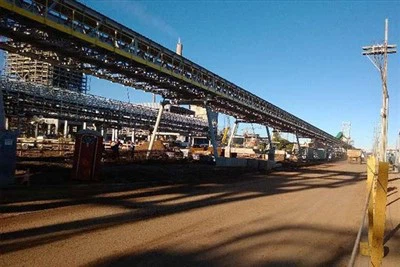


SONGDA HEAVY: Your Professional Belt Conveyor Supplier
Wuxi Songda Heavy Machinery Co., Ltd. was established in 2010. The company is committed to be one of the best quality manufacturing company in China for heavy machineries, non-standard machineries and its steel structures, components, assembly and commissioning, providing varous parts for bulk material handling equipment, mining equipment, off-shore equipments, port and terminal machieries, conveyor system, self-unloading ships, marine engineering project. Songda has maintained its long-term business cooperation with a number of world-famous companies.
Why Choose Us?
Variety of Products
We mainly research and produce heavy machineries, non-standard machineries and its steel structures, components, assembly and commissioning. Additionally, we also provide varous parts for bulk material handling equipment, mining equipment, off-shore equipments, port and terminal machieries, conveyor system, self-unloading ships, marine engineering project. As a result, you can easily find the equipment you need.
Wide Market
SONGDA HEAVY has specialized in heavy machineries over 14 years, with our products sold in over 80 countries and regions worldwide. Now, we have successfully maintained long-term business cooperation with a number of world-famous companies and received unanimous praise.
Superior Service and Logistics
Our customer service team is available to provide support and solutions to customers at all times. All after-sale request will be responded in 24 hours. We provide finite element analysis services, process design and validation of Mobile Bulk Reception Feeder. Besides, complete and professional process equipment guarantees the reliability of products and on-time delivery. Our past order lead time is better than the industry average.
Advanced Equipment
Our company has automatic production lines and advanced production equipment, from laser cutting, CNC bending, large boring milling equipment, big painting hall, heavy lift assembly site to meet your requirement.
High Quality
Songda factories covered 15000 square meters and totally 150 employees to promise the products best quality control. Our professional QC team and the standards/certifications we followed, such as ISO9001, ISO14001, ISO18001, ISO3834 , EN1090, EN287, AWS2.1. AS can strictly control the product quality. We mainly choose raw material from big steel factory, such as NANJING STEEL, SHA STEEL, which are best and largest raw material manufacturer in China.
Rich Experience
We have more than 14 years of experience in material handling equipment R&D, stacker reclaimer, ship loader, ship unloader, heavy duty steel structure manufacturing and so on. Moreover, we are an innovation driven company and have 15 patents, and 3-5 patents are authorized every year.
Brief Introduction to Belt Conveyor
A conveyor belt is the carrying medium of a belt conveyor system (often shortened to belt conveyor). A belt conveyor system is one of many types of conveyor systems. A belt conveyor system consists of two or more pulleys (sometimes referred to as drums), with a closed loop of carrying medium—the conveyor belt—that rotates about them. One or both of the pulleys are powered, moving the belt and the material on the belt forward. The powered pulley is called the drive pulley while the unpowered pulley is called the idler pulley. There are two main industrial classes of belt conveyors; Those in general material handling such as those moving boxes along inside a factory and bulk material handling such as those used to transport large volumes of resources and agricultural materials, such as grain, salt, coal, ore, sand, overburden and more.
The Types of Belt Conveyor
Flat Belt Conveyor
The flat belt conveyor belt is one of the most prevalent conveyor systems in use today. Flat belts are useful for internal conveyance, i.e. transporting items within a facility. This type of conveyor belt uses a series of powered pulleys to move a continuous flat belt, which can consist either of natural material or synthetic fabric (ex. polyester, nylon). Items are placed on top of the moving belt and carried from one end to the other.
Curved Belt Conveyor
This type of belt conveyor uses a curved frame to carry items around corners, make tight transfers, or maximize available floor space. These belts’ curves can go up to 180°. True curved conveyors that do not have any straight runs can only use flat belts, as modular plastic belts require straight runs before and after curves.
Inclined Belt Conveyor
Incline belt conveyors feature a center drive, gear motor, and take-up with a single or double nose. And instead of using a smooth-surfaced belt, this type of conveyor has a rough surface on the belt, ideal for carrying products up or down. These systems can cross over with cleated belt conveyors to transport products to different elevations while keeping them from falling off the line. Aside from transferring objects between floors, these conveyor belts are also suitable for boosting gravity flow systems.
Modular Belt Conveyor
While flat belt conveyors use a single, continuous loop of material, modular conveyor belt systems use a single loop made of countless interlocked pieces, usually made of hard plastic. These segments can be removed and replaced individually, in contrast to having to discard the entire belt. They’re also easier to wash, as well as more resistant to sharp and abrasive materials. This makes modular belt conveyors simpler to maintain and repair than their flat belt counterparts. In fact, they can travel straight, go around a corner, and incline and decline using a single belt and the same motor all throughout.
Troughed Belt Conveyor
This conveyor has a trough-shaped belt, which helps contain and control the flow of bulk materials. It is commonly used in mining and aggregate operations to convey materials like coal, sand, and gravel.
Ruggedized Belt Conveyor
This type of conveyor is designed for heavy-duty applications, with a reinforced belt and sturdy frame to handle abrasive or bulky materials. It is often used in mining, steel, and cement industries.
Zoned Belt Conveyor
This conveyor is designed with different zones or sections, each optimized for different types of materials or transport requirements. It can handle a variety of materials and applications, from light parts to bulk materials.
Sanitary and Washdown Conveyors
These conveyor belts are made of rated materials and are ready to be sanitized often. These belts are usually associated with food-grade applications. Sanitary conveyors are generally flat wire belts. These are tough belts that stand up to wear and tear and are easy to clean.
Application of Belt Conveyor
Mining
Belt conveyors are essential in mining operations, where they are used to transport mined materials from the face of the mine to processing facilities or stockpiles. They can handle bulk materials such as coal, ore, and rock efficiently and reliably.


Manufacturing
Belt conveyors are commonly used in manufacturing plants to transport raw materials, parts, and finished products throughout the production process. They can be configured to fit specific production lines and help automate the material handling process.
Warehousing and Distribution
In warehouses and distribution centers, belt conveyors are used to sort, convey, and package goods. They can help improve efficiency by automating the transportation of items between different areas of the warehouse.


Recycling
In recycling centers, belt conveyors are used to sort and convey recycled materials, such as plastic, glass, and metal. They help automate the sorting process and improve the efficiency of recycling operations.
Agriculture
Belt conveyors play a key role in agricultural operations, such as grain handling and processing. They are used to transport harvested crops from the field to storage facilities or processing plants.

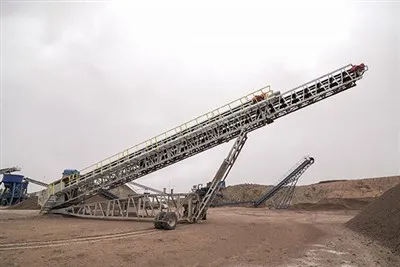
Utilities
Belt conveyors are also used in utilities such as power plants and water treatment facilities. They can be used to convey fuel, ash, and other materials throughout the plant or facility.
Benefits of Belt Conveyor
Efficient Material Handling
Belt conveyors provide an efficient means of transporting bulk materials and piece articles over long distances or through multiple stages of a production process. They can handle high volumes of materials continuously and at a consistent speed, improving overall productivity.
Cost-Effectiveness
Belt conveyors are a cost-effective solution for material handling. They require relatively low initial investment and have low operating costs compared to other material handling systems. Additionally, they have a long service life and require minimal maintenance, further reducing overall costs.
Flexibility and Versatility
Belt conveyors can be customized to fit specific applications and convey a wide range of materials, from light to heavy, bulk to piece. They can be designed to operate in various environments, including indoor and outdoor settings, and can be easily integrated into existing systems or expanded to meet changing needs.
Reliable Performance
Belt conveyors are designed for continuous operation and can handle high volumes of materials without breaking down or requiring frequent repairs. They are built with durable materials and components to ensure reliable performance even under demanding conditions.
Safety and Ergonomics
Belt conveyors improve safety by reducing the need for manual lifting and handling of heavy materials. They also help reduce ergonomic issues such as back strain and muscle fatigue that can arise from manual material handling tasks.
Environmental Friendliness
Belt conveyors can be designed to minimize dust and spillage, reducing the impact on the environment. Additionally, they consume less energy compared to some other material handling systems, making them a more environmentally friendly choice.
Key Factors to Consider When Choosing Belt Conveyor
Material Type and Characteristics
The type and characteristics of the material you will be transporting on the belt conveyor are crucial. Consider the weight, bulk density, abrasiveness, moisture content, and other properties of the material. These factors will affect the selection of the belt material, conveyor design, and other components to ensure durability and performance.
Conveyor Length and Capacity
Determine the required length of the conveyor and the capacity needed to handle the expected material flow rate. The length and width of the conveyor belt, as well as the speed of the belt, will depend on these factors.
Operating Environment
Consider the operating environment where the belt conveyor will be installed. This includes indoor or outdoor use, exposure to weather conditions, temperature extremes, dust, and moisture.
Safety
Safety should always be a top priority when selecting a belt conveyor. Consider the safety features available, such as guards, emergency stop buttons, and slip-resistant surfaces.
Cost and Budget
Cost is always a factor when making any purchase decision. Evaluate the cost of the belt conveyor system, including the initial purchase price, installation costs, and ongoing maintenance expenses. Ensure the system fits within your budget while still meeting your material handling requirements.
Control and Automation
Consider the level of control and automation offered by the belt conveyor system. Modern conveyors often come with advanced control systems that allow for precise speed control, load monitoring, and automatic adjustments. Automation can improve efficiency, reduce operator error, and enable remote monitoring and control.
Routine Maintenance
● Do a routine cleaning at the start and end of the day to ensure that there are no components that will interfere with the function of the conveyor belt.
● Physically inspect conveyor drive components and any debris that may be stuck in the conveyor mechanism.
● Inspect the entire surface of the conveyor belt for any wear that may cause issues.
● Check for damaged or broken parts.
● Check rollers for any structural damage, debris buildup, motor, etc.
● Check for misalignment of conveyor belts.
● Check the conveyor belt and joints to make sure that there is no unusual peeling or damage.
● Check machine guard placement (for belts, pulleys, sprockets, and other pinch points).
● Check emergency stops to make sure that it is functioning properly.
Belt Maintenance
● Check the conveyor belt for cuts, cracks, or damages.
● Take note of any belt slippage or material spillage.
● Check for any conveyor belt abrasions.
● Check the upper and lower cover rubber for damage and excessive wear.
● Check the belt chain for any extra slack, fraying, buildup, or damage.
Lubrication
Lubricate moving parts and bearings regularly to reduce friction and wear. Use the recommended lubricants and follow the manufacturer's recommendations for lubrication intervals.
Safety Checks
Perform safety checks to ensure all guards, safety devices, and warning labels are in place and functioning properly. Check for any potential hazards or safety risks that could pose a threat to operators or maintenance personnel.
Documentation and Records
Keep detailed records of maintenance activities, inspections, and repairs. This information can help identify trends, predict potential issues, and plan for future maintenance activities.
Our Factory
Below is our factory:


Certifications


Ultimate Guide
We're well-known as one of the leading belt conveyor manufacturers and suppliers in China. If you're going to buy high quality belt conveyor made in China, welcome to get more information from our factory. For price consultation, contact us.
Galvanized Coal Bunkers, Crawler Boom Shuttle Mobile Stacker Reclaimer, Continuous ship loader